

Case Study · Cap & Closure Mold
5-Gallon Bottle Cap Mold Engineering Study
A technical review of a published 12- or 16-cavity water bottle cap mold concept using LLDPE, S136 steel, independent cavity cooling and two-stage ejection.
Project Context
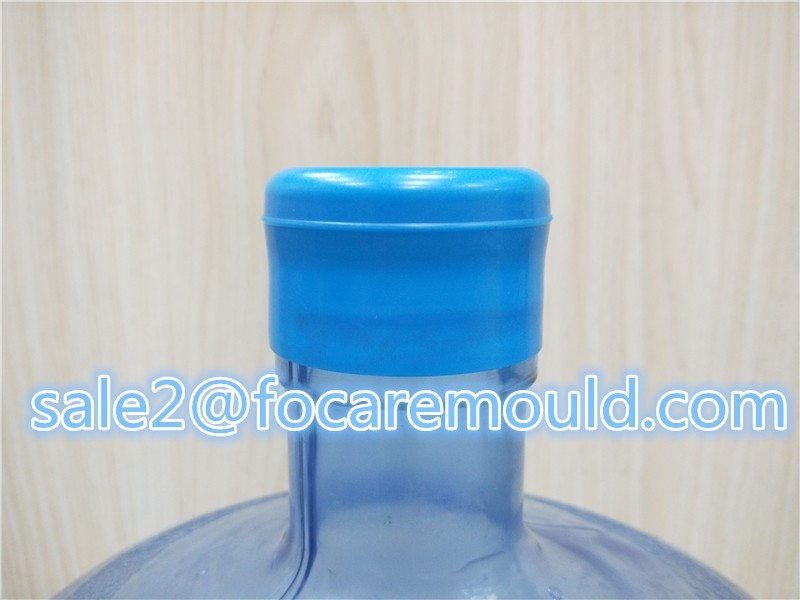
This engineering study explains a published Focare configuration for a 5-gallon water bottle cap mold. The reference design uses LLDPE, S136 mold steel at 48–52 HRC and a 12- or 16-cavity layout. Each cavity is planned with independent cooling, while the ejection system uses two sequential movements to release the cap’s undercut geometry without damaging the part.
The Challenge
A high-cavity cap mold must keep cavity-to-cavity filling, cooling and ejection behavior consistent. The release geometry adds another constraint: forcing the undercut off the core in one uncontrolled movement can deform or damage the cap.
Engineering Analysis
Material and Steel Selection
The published example uses LLDPE for the cap. Focare lists S136 steel hardened to 48–52 HRC for the mold core and cavity. Final steel treatment and surface finish should be matched to resin additives, production volume and maintenance requirements.
Independent Cavity Cooling
Each cavity has an independent cooling circuit in the published concept. This supports cavity-level balancing and troubleshooting, helping engineers investigate temperature differences without treating the complete mold as a single cooling zone.
Two-Stage Ejection
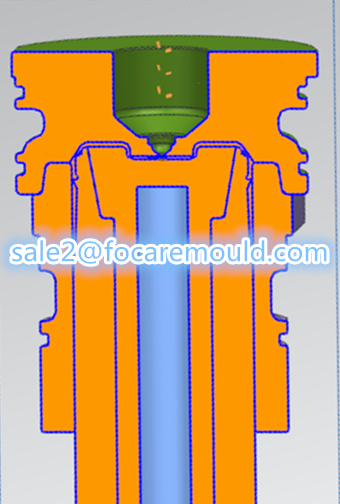
The ejector plates move together during the first stage. After a controlled travel distance, the upper plate stops and the lower plate continues. This staged motion releases the undercut progressively instead of forcing the cap off in one step.
Cavity-to-Cavity Consistency
For 12- or 16-cavity production, gate balance, venting, cooling-water distribution and core alignment should be checked as one system. First trials should compare part weight, critical dimensions and visual condition by cavity number.

Published Tooling Solution
- Application: 5-gallon water bottle cap
- Resin reference: LLDPE
- Cavity options: 12 or 16
- Core and cavity steel: S136
- Steel hardness: 48–52 HRC
- Cooling: independent circuit for each cavity
- Release concept: two-stage ejection for undercut geometry
Recommended Validation Plan
- Record part weight by cavity.
- Measure sealing and neck-contact dimensions by cavity.
- Inspect the undercut after each ejection stage.
- Compare cavity cooling return temperatures.
- Check cap deformation after conditioning.
- Run the customer’s leak, sealing and fit tests.
FAQ
Why is two-stage ejection used?
It releases the cap’s undercut progressively, reducing the risk of part damage compared with uncontrolled one-step ejection.
Can the mold use 12 or 16 cavities?
Both are listed in the published Focare reference. The final choice depends on output target, shot volume, platen area, tie-bar spacing and project economics.
Does independent cooling guarantee equal cycle time?
No. It provides better control and diagnostic access, but actual results still depend on channel geometry, flow rate, water temperature, resin and process settings.
What is needed for a quotation?
Send the cap 3D drawing, bottle-neck standard, resin grade, annual demand, required tests and molding-machine specification.
Plan Your High-Cavity Closure Mold
Send your cap drawing and production requirements to Focare for a cavity-layout, cooling and ejection review.