


AUTOMOTIVE · PP+TPE · 1+1 CAVITY
2K AUTOMOTIVE AC FLAP MOLD
Two-component injection tooling for automotive HVAC temperature-partition flaps. A rigid PP carrier and integrated TPE sealing zone are molded for controlled airflow, dimensional stability and repeatable assembly into the HVAC module.
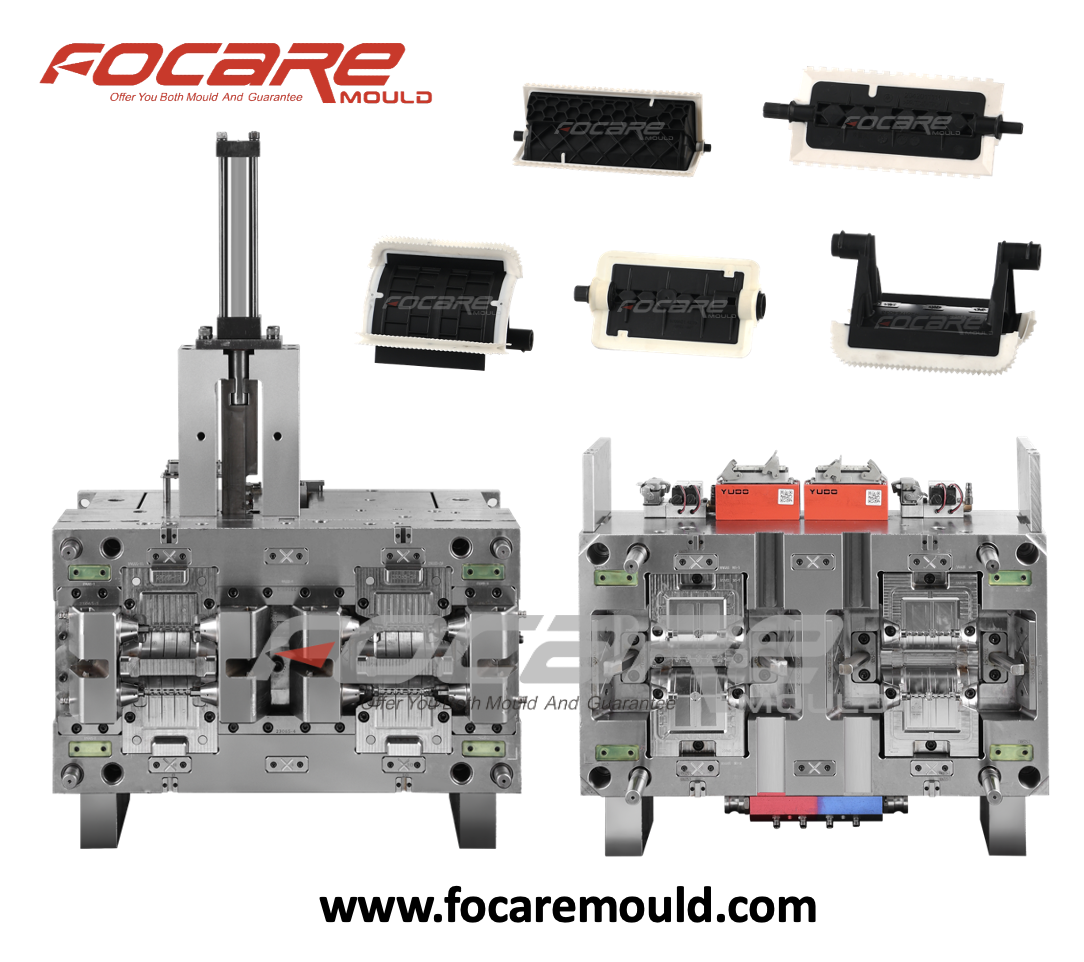
REFERENCE SPECIFICATION
- Material: PP + TPE
- Cavity: 1+1
- Steel: 2738, 28–33 HRC
- Injection: 4-tip valve-gate hot runner
- Mold size: 900 × 600 × 500 mm
- Suggested machine: 250–280 ton 2K machine
- Application: HVAC airflow control
- Process: Two-shot molding
What the HVAC Flap Does
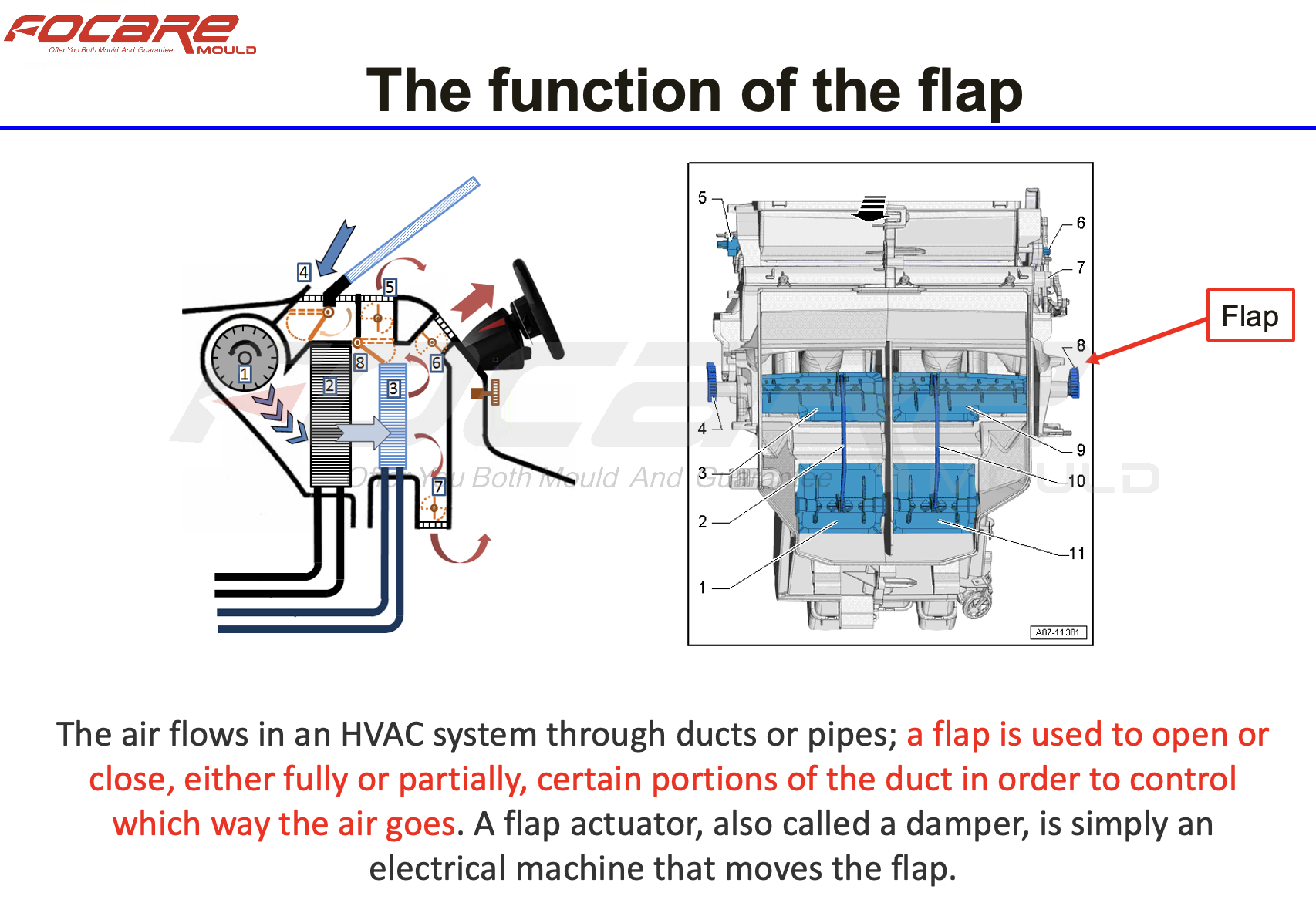
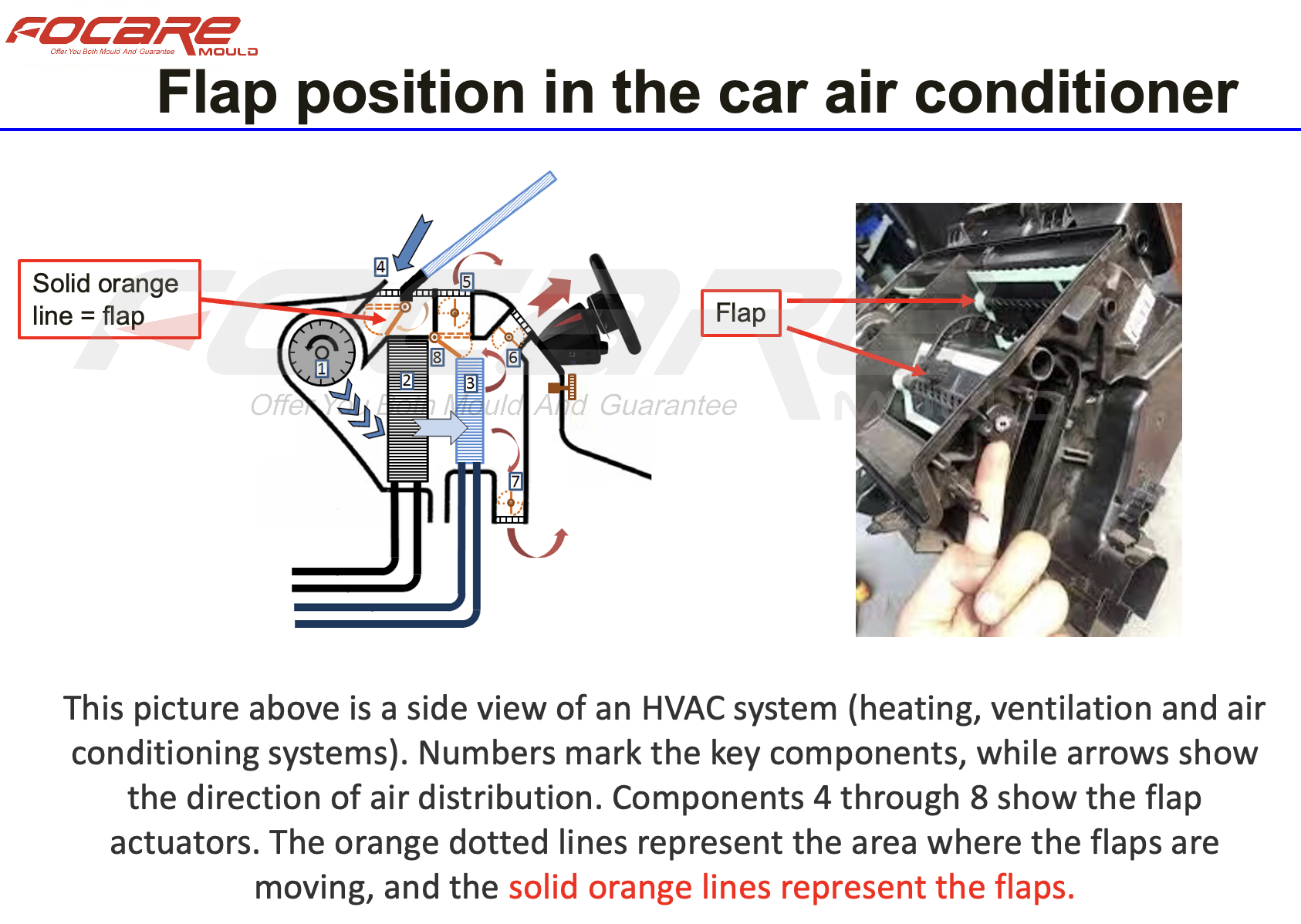
Inside an automotive heating, ventilation and air-conditioning system, the flap opens, closes or partially redirects air through selected ducts. The soft sealing area helps control leakage around the rigid carrier while avoiding a separately assembled seal.
Engineering Priorities
- Dimensional control of the carrier, pivots and assembly interfaces.
- Stable PP-to-TPE bonding and consistent sealing-edge thickness.
- Valve-gate balance to reduce weld lines, short shots and local overpacking.
- Repeatable transfer positioning between the first and second shot.
- Cooling and ejection designed to control warpage and protect soft zones.
- Tool size and rotary operation matched to the selected 250–280 ton machine.
Frequently Asked Questions
Why combine PP and TPE?
PP provides the structural carrier while TPE supplies the flexible sealing function. Final resin grades and adhesion must be validated for the customer’s specification.
Is the published machine range universal?
No. The 250–280 ton range belongs to this reference configuration. Clamp force, shot capacity, rotary-table size, tie-bar spacing and mold weight must be checked for each new project.
What data is needed for DFM?
Provide the 3D part and assembly data, material grades, sealing requirement, dimensional tolerances, annual quantity, validation standard and two-color machine specification.
REVIEW YOUR AUTOMOTIVE 2K PART
Send the component model, tolerance plan, resin data and machine details for a production-oriented mold proposal.