


ENGINEERING CASE · HAND TOOL · PP+TPE
PP+TPE SCREWDRIVER HANDLE MOLD ENGINEERING CASE STUDY
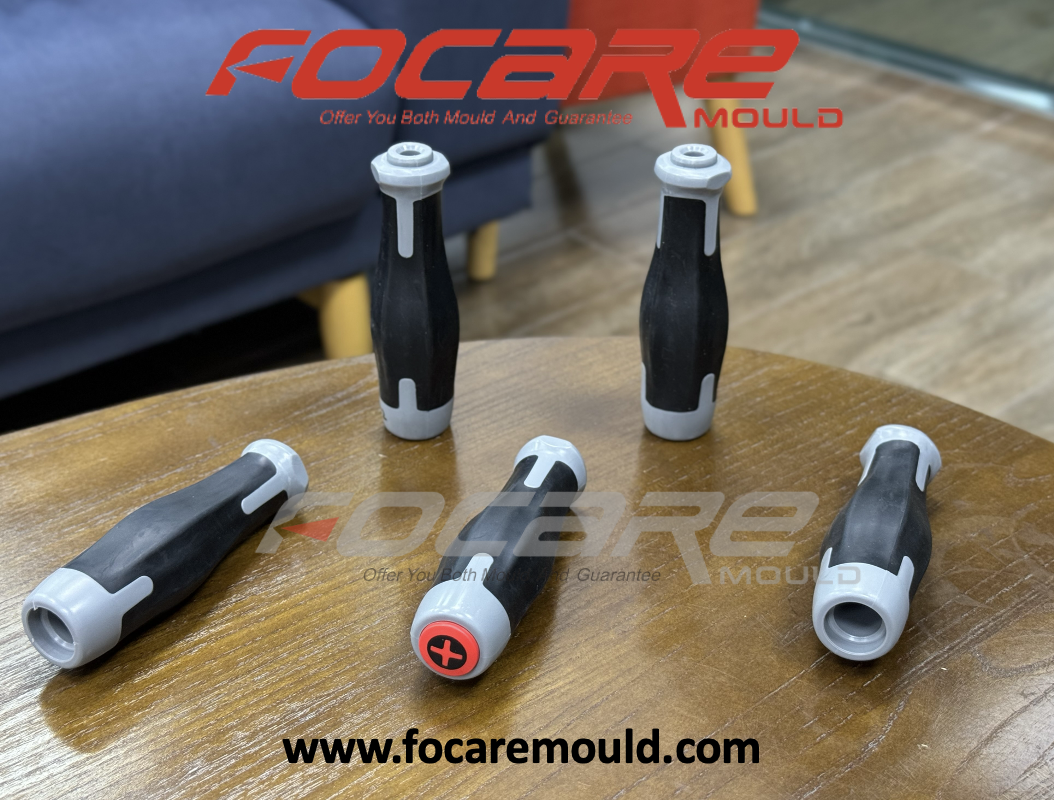
This engineering review examines Focare’s published 6+6 cavity two-color screwdriver handle mold configuration. It explains the principal tooling decisions for combining a rigid PP handle structure with a soft TPE grip while keeping project claims limited to publicly available specifications.
THE ENGINEERING CHALLENGE
A screwdriver handle must transfer torque through a rigid body while providing a comfortable, non-slip contact surface. In a two-shot PP+TPE design, the engineering team must coordinate material bonding, shut-off geometry, soft-zone thickness, cavity-to-cavity balance and accurate rotary transfer between shots.
For a 6+6 cavity tool, small differences in filling, cooling or index position can repeat across multiple parts. The objective is therefore not only a visually clean boundary, but also repeatable grip geometry and stable ejection across every cavity.
PUBLISHED PROJECT CONFIGURATION
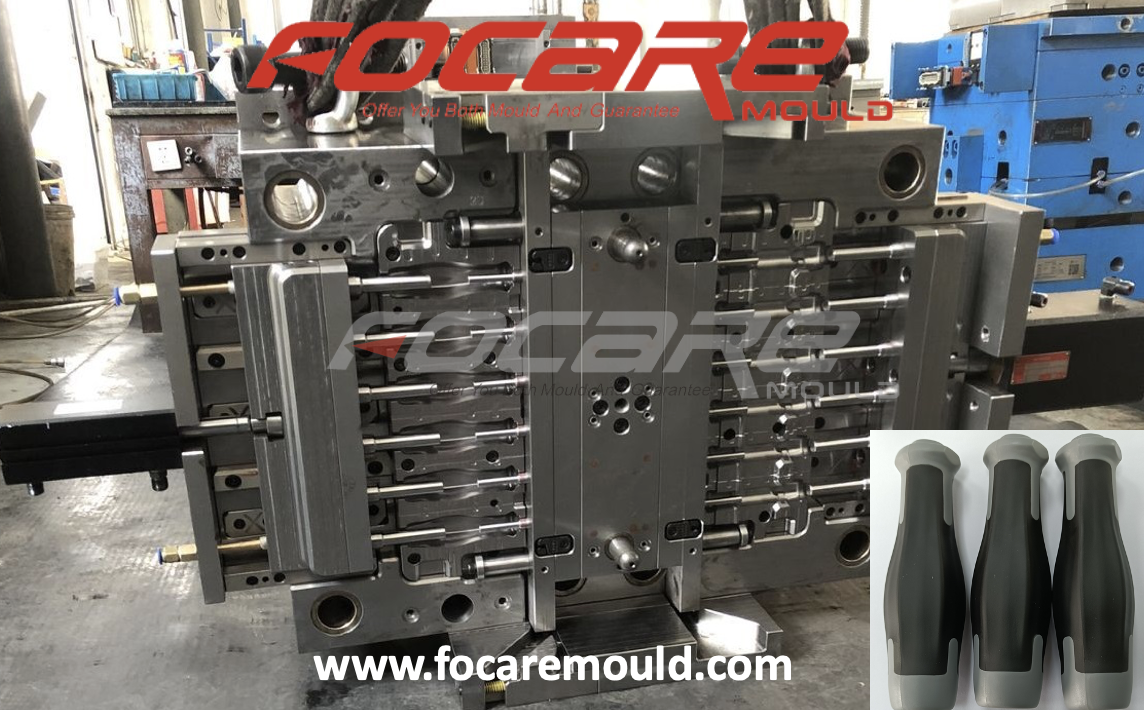
- Product material: PP + TPE
- Cavity layout: 6+6
- PP runner: six-tip hot runner
- TPE runner: three-plate cold runner
- Mold steel: imported 2344, 45–48 HRC
- Mold dimensions: 720 × 610 × 623 mm
- Mold weight: 1,994 kg
- Suggested machine: 280-ton rotary-axis two-color injection machine
ENGINEERING ANALYSIS
1. PP–TPE material compatibility
The exact TPE chemistry must be selected for the specified PP grade. Avient identifies material selection, substrate condition, processing temperature and shut-off design as important adhesion factors. A mechanical interlock should be considered where the grip edge is exposed to repeated torque or abrasion.
2. Grip-zone shut-offs
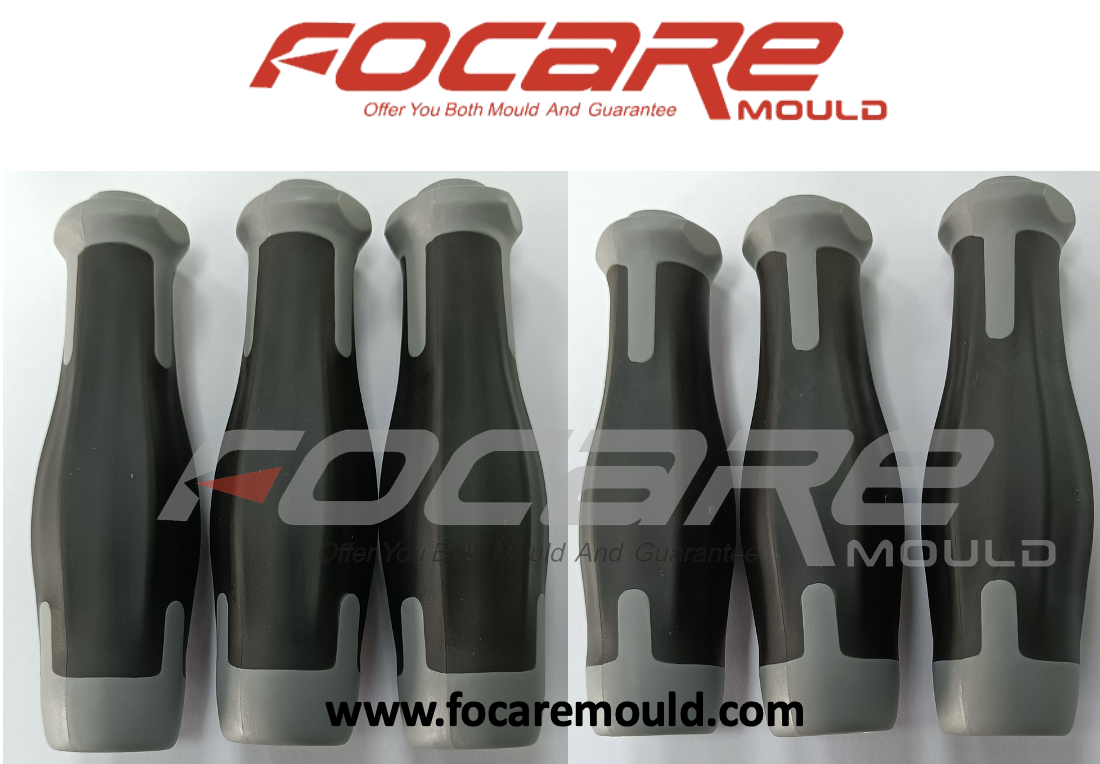
The interface should create a distinct, ventable TPE cavity and a sharp color boundary. Shut-off interference, draft and surface texture require DFM review to reduce flash and protect the edge from peeling.
3. Runner strategy
The published configuration uses six PP hot-runner tips to distribute the rigid shot and a three-plate cold runner for TPE. The final gate diameters, locations and pressure balance must be confirmed by flow analysis and trial data for the selected resin grades.
4. Rotary-axis repeatability
The first-shot PP core must arrive at the TPE station in a consistent position. Rotary coupling, locking, part retention and thermal growth should therefore be included in mold qualification.
RECOMMENDED VALIDATION PLAN
- Confirm the PP and TPE supplier grades and bonding window.
- Review Moldflow results for both shots and all twelve cavity positions.
- Measure rotary index repeatability and first-shot retention.
- Inspect TPE flash, short fill, weld lines, color boundary and grip texture.
- Perform peel or pull testing at agreed grip locations.
- Carry out functional torque, aging and chemical-resistance testing based on the end-use specification.
These are engineering recommendations, not published performance results for this project.
FREQUENTLY ASKED QUESTIONS
Why combine PP and TPE for a screwdriver handle?
PP can provide the rigid load-bearing body, while a compatible TPE can add grip, comfort and vibration control without a separate assembly operation.
Does 6+6 mean twelve identical cavities?
It describes six first-shot positions and six corresponding second-shot positions in the published two-color configuration. The exact rotary sequence and cavity layout must be verified from the approved tooling design.
Are the cycle time and mold life publicly verified?
No. The referenced Focare page publishes the tooling configuration but not verified cycle-time, yield or mold-life results. Those values should be established during customer-specific trials and qualification.
PLAN YOUR 2K TOOL HANDLE PROJECT
Send the handle STEP file, PP and TPE grades, target volume, torque requirements and machine specification for an engineering review.
Sources: Focare published tooling reference; Avient Overmolding Guide; Avient Part Design; Teknor Apex Overmolding Guide.