2K INJECTION MOLD CASE STUDIES
Explore published tooling references and engineering analyses for two-color household, oral-care and industrial sealing applications. Each case study separates verified project specifications from design considerations that must be confirmed for a new mold program.
WHAT EACH CASE STUDY EXAMINES
From material pairing and multi-cavity balance to hot-runner layout, machine compatibility and functional shut-offs, these studies show how product requirements translate into practical tooling decisions.
MATERIAL INTERFACES
Rigid-to-soft bonding, shut-offs, mechanical interlocks and controlled color boundaries.
CAVITY BALANCE
Runner and gate layouts developed for consistent filling across both shots.
MACHINE MATCHING
Clamp force, platen, shot size, rotary mechanism and opening stroke verification.
THERMAL CONTROL
Cooling, hot-runner stability and resin-specific processing windows.
FUNCTIONAL SURFACES
Sealing edges, grip zones, visible boundaries and flash-sensitive areas.
PRODUCTION VALIDATION
DFM, mold trials and project-specific confirmation before mass production.
FROM PRODUCT REQUIREMENTS TO PRODUCTION-READY TOOLING
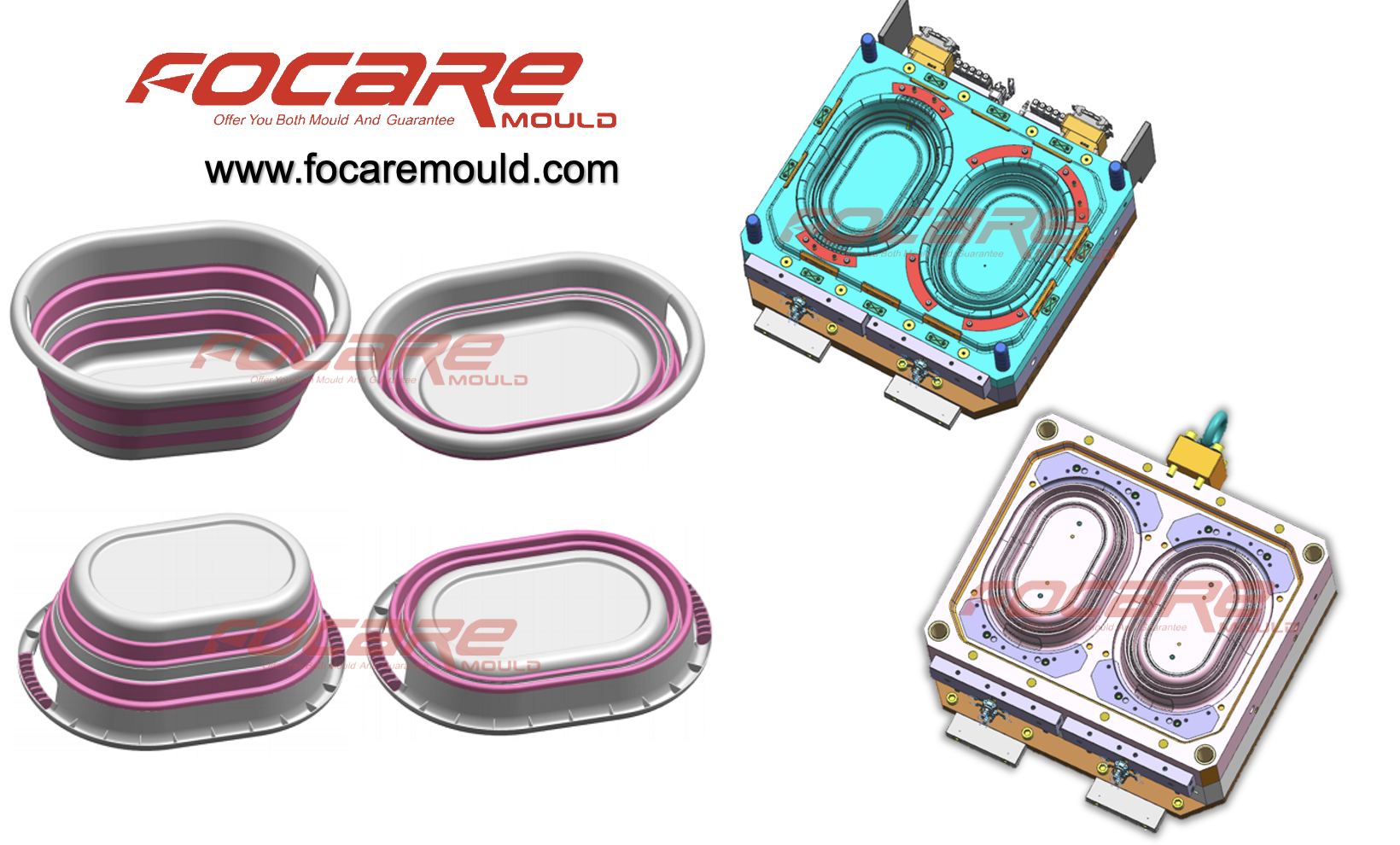
2K Collapsible Laundry Basket Mold
Large-format 1+1 cavity project reference using 718 steel, a 12-tip hot runner and a 550-ton two-color machine.
Focus: filling balance, rigid–flexible interfaces and mold–machine matching.
READ CASE STUDY →
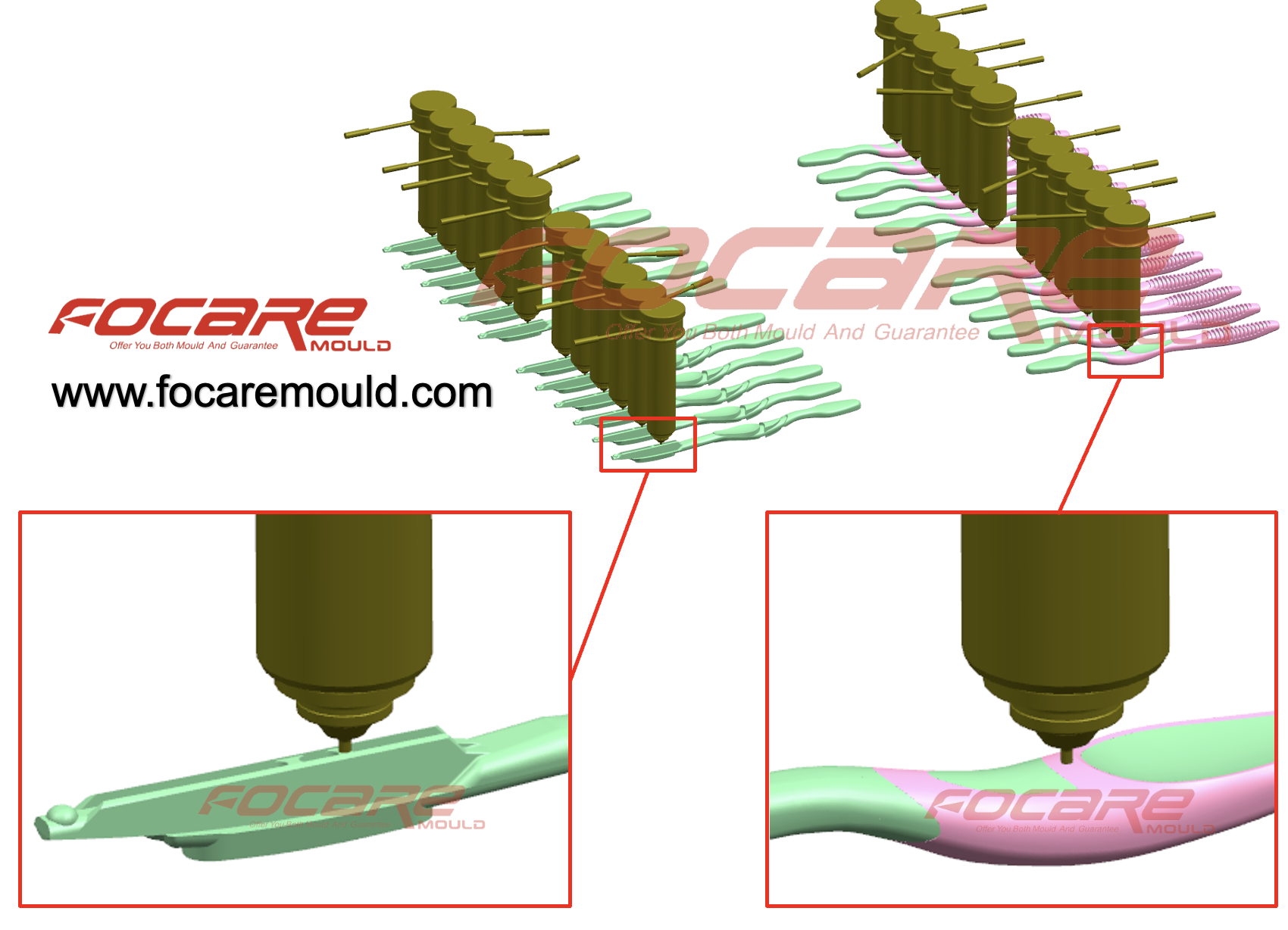
2K Toothbrush Handle Mold
High-cavity project reference using Germany S420 steel and a 24-tip YUDO valve-gate hot runner.
Focus: cavity balance, rotary-core positioning and cosmetic boundaries.
READ CASE STUDY →
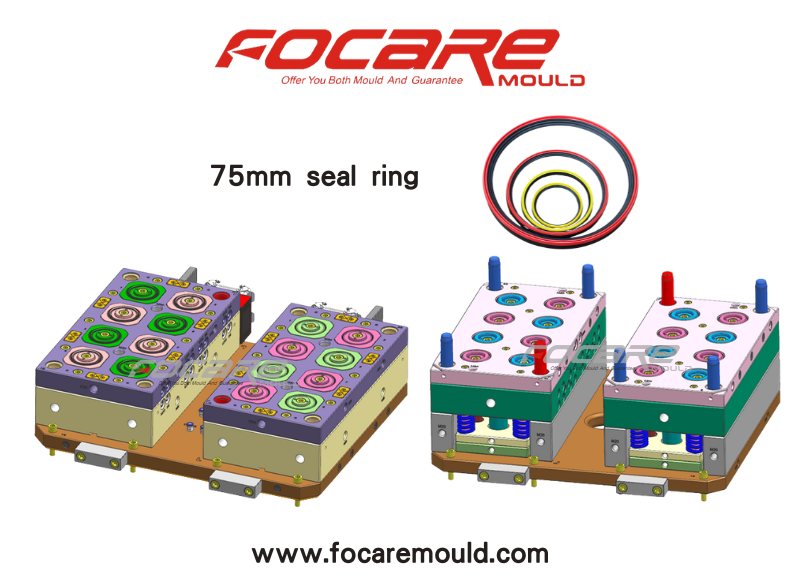
Two Color Seal Ring Mold
8+8 cavity 75 mm seal-ring tooling reference using European 2316 steel and a 16-tip YUDO hot runner.
Focus: concentric alignment, flash control and balanced filling.
READ CASE STUDY →
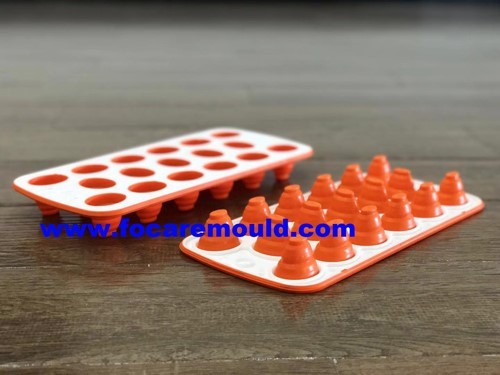
PP+TPE COLLAPSIBLE ICE TRAY
Engineering study of a 1+1 cavity PP+TPE collapsible ice tray using two-shot rotary molding and soft-bottom release design.
Focus: TPE thickness, PP–TPE bonding, clean release and freezer-use validation.
READ CASE STUDY →
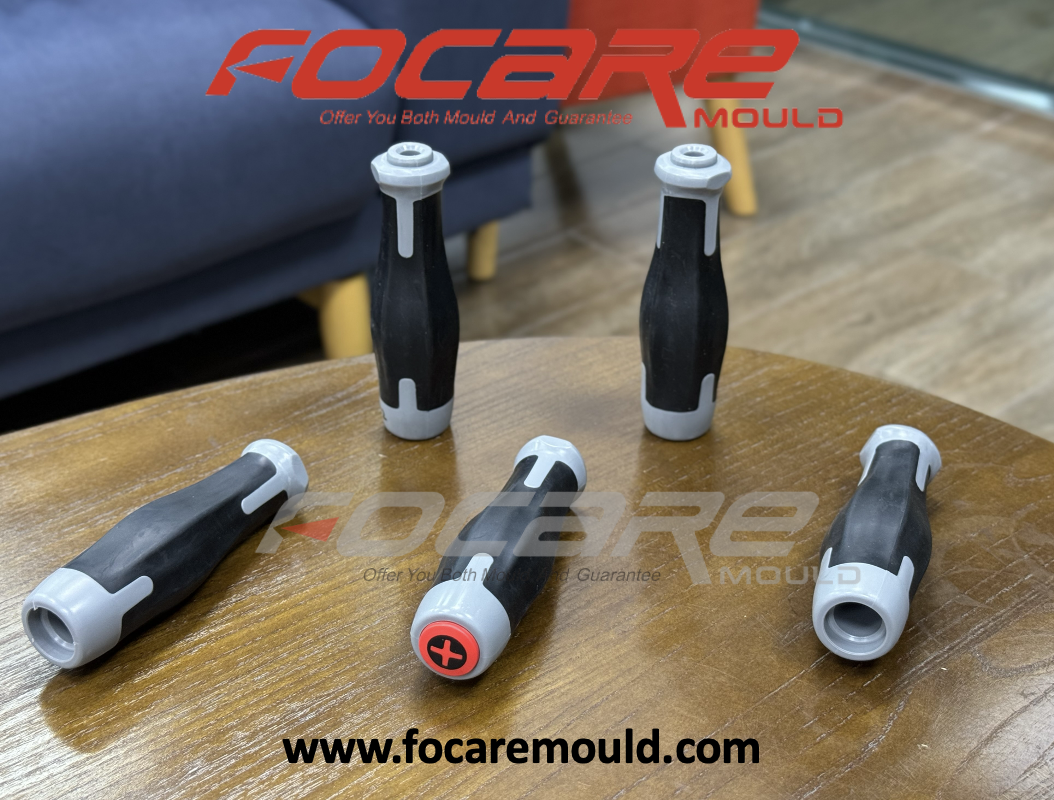
PP+TPE SCREWDRIVER HANDLE MOLD
Engineering review of a published 6+6 cavity PP+TPE screwdriver handle tool using 2344 steel, a six-tip PP hot runner and TPE cold runner.
Focus: material bonding, rotary-axis transfer, cavity balance and flash control at the grip boundary.
READ CASE STUDY →

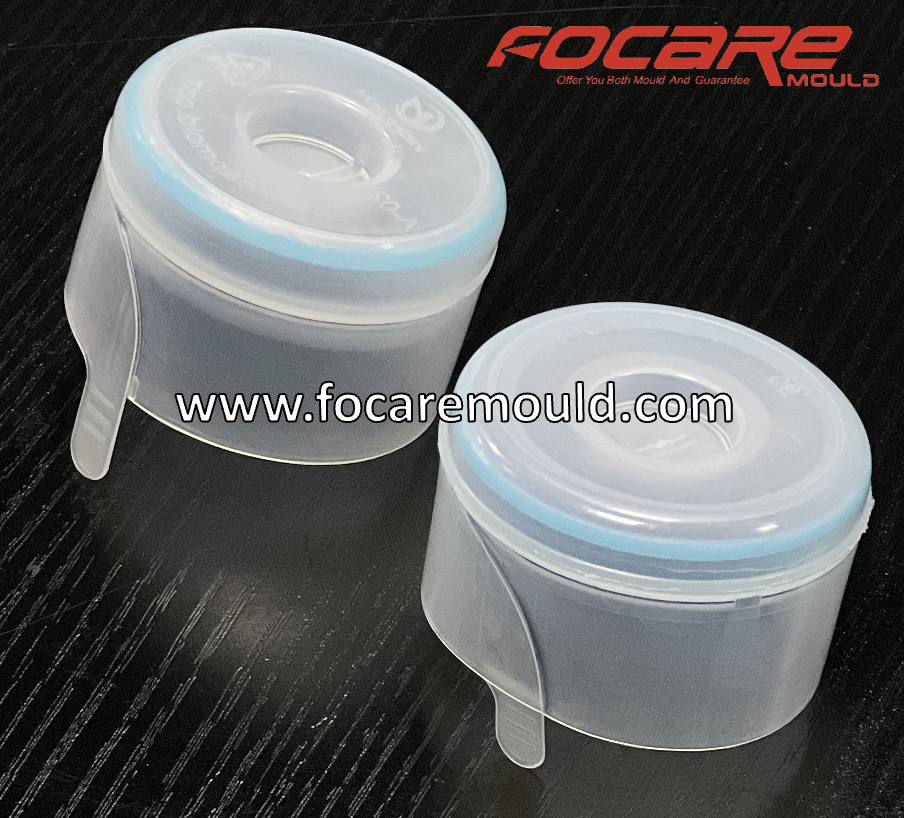
Engineering study of a 12- or 16-cavity LLDPE cap mold using S136 steel, independent cooling and two-stage ejection.
Focus: cavity balance, independent cooling and controlled undercut release.
VERIFIED SPECIFICATIONS, CLEAR ENGINEERING CONTEXT
Each case study uses published Focare Mould project specifications and clearly labels project-specific engineering analysis. No customer identity, production result or performance claim is added unless it is supported by a public source.
DFM & MOLD DESIGN
Product analysis, material compatibility and practical mold-structure development.
PRECISION MANUFACTURING
Machining, assembly and inspection focused on accuracy and long-term reliability.
MOLD TRIAL & SUPPORT
Trial verification, optimization and technical support before and after delivery.
HOW TO USE THESE PROJECT REFERENCES
Are these universal mold specifications?
No. They are published reference configurations. Final cavity count, steel, runner, machine and cycle targets must be confirmed from the new product drawing and production requirements.
Can Focare develop a similar but different product?
Yes. The reference shows relevant tooling experience, while a new project receives its own DFM, material review, mold layout and machine-matching process.
What should a buyer send for engineering review?
Provide a 3D drawing, resin grades, dimensional and appearance requirements, annual volume, cavity target and complete injection-machine specifications.
How are unverified results handled?
Unpublished cycle times, tolerances, mold life and customer outcomes are not presented as facts. They remain targets to be agreed and validated for each project.
DISCUSS YOUR NEXT MOLD PROJECT
Share your product drawing and production requirements for a project-specific DFM and tooling proposal.